Urge the Authorities to Prioritise Non-Animal Methods for Pesticide Toxicity Testing

The Department of Agriculture and Farmers Welfare, Ministry of Agriculture and Farmers Welfare, is asking for public comments on the draft ‘Pesticide Management Bill, 2025’ to modernise pesticide regulations. Let the authorities know that reliable non-animal methods should be used to evaluate pesticides.
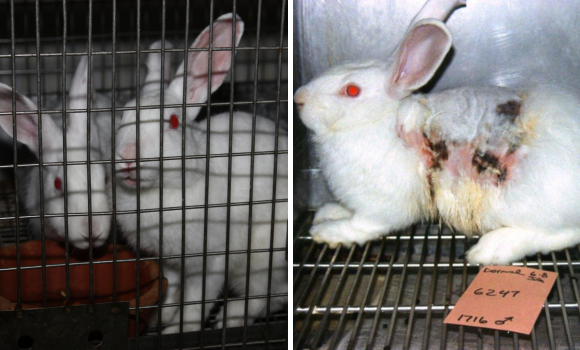
Every year, tens of thousands of animals are experimented upon in pesticide toxicity tests. Animals are forced to ingest or inhale toxic chemicals or have them applied to their eyes or skin. Many of these tests on animals were developed many decades ago, are time-consuming, lack human relevance, and fail to accurately predict how chemicals will affect people or the environment.

Non-animal methods are increasingly being accepted around the globe by regulators for their human-relevance, reliability, and ethical advantages. Incorporating similar provisions in Indian regulations will ensure India is using the best available science, better protect farmers and the environment, safeguard human health, and spare countless animals from tests.

You can help make this change. Sign the petition below, and the compiled signatures will be delivered to the Department of Agriculture and Farmers Welfare, Ministry of Agriculture and Farmers Welfare, showing support for non-animal methods for toxicity assessment of pesticides.

Appeal: 

Dear Honourable Minister:

I urge the Department of Agriculture and Farmers Welfare, Ministry of Agriculture and Farmers Welfare to strengthen the ‘Pesticide Management Bill, 2025’ by prioritising scientifically advanced, non-animal methods to assess the toxicity of pesticides and ensuring that tests on animals are only considered as a last resort. These measures would improve the reliability and robustness of safety data; better protect farmers, consumers, and the environment; and bring India in line with best global practices.

Non-animal methods provide the opportunity to more quickly and accurately predict risks to human health and the environment than traditional tests on animals. These methods are already being prioritised by global regulators for their efficiency and reliability, and international pesticide laws encourage avoiding tests on animals wherever possible.

Such amendments would also align with India’s legal obligation under the Prevention of Cruelty to Animals Act, 1960, which requires ‘that experiments on animals are avoided wherever it is possible to do so’.

Please take this opportunity to ensure that India’s pesticide law incorporates the best available science by prioritising non-animal methods.

Thank you for your attention to this important issue.

Sincerely,

[Your Signature]

Fields with an asterisk(*) are required.​

Sign up for e-mails including these:

UN MIS Hidden Thank You Text w/ Social Sharing Email Info - *Important Note* You must UNLINK this shared library component before making page-specific customizations.